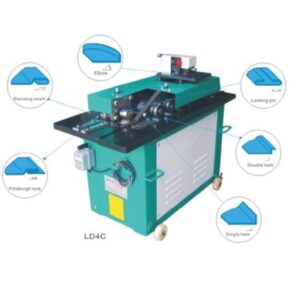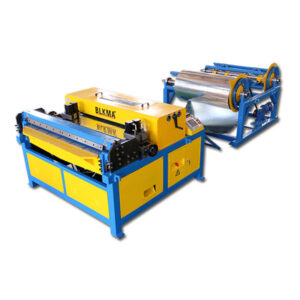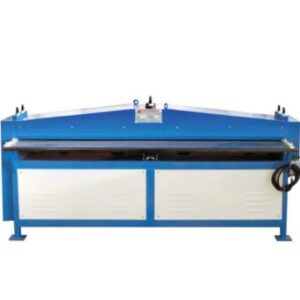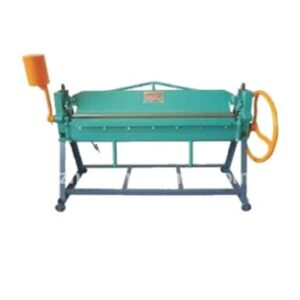
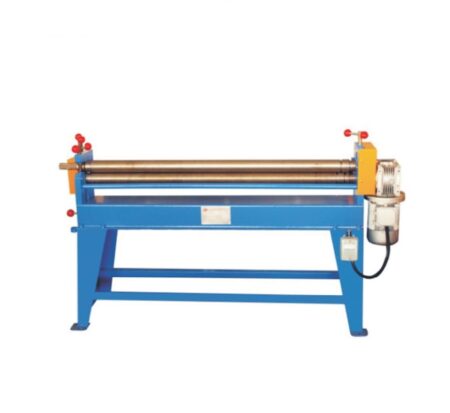
A Roller Plate Bender is a powerful industrial machine used to bend metal plates and sheets into cylindrical, conical, or curved shapes. This machine plays a vital role in sheet metal fabrication, HVAC duct manufacturing, tank production, and heavy engineering industries. Because of its precision and strength, industries rely on roller plate benders to achieve accurate bending results with consistent quality.
Moreover, a roller plate bender improves fabrication efficiency by reducing manual handling and material wastage. Instead of traditional forming methods, this machine delivers smooth and controlled bending, which ensures uniform results. As a result, manufacturers maintain high production standards while saving time and labor costs.
Roller Plate Bender in Lahore Pakistan is widely used in industrial zones, fabrication workshops, and manufacturing units. Lahore’s growing construction and industrial sectors require reliable machines that support continuous plate bending operations.
Therefore, industries in Lahore prefer roller plate benders because they provide stable performance and precise control. Additionally, local availability allows easy installation, operator training, and after‑sales support. Consequently, manufacturers in Lahore meet project deadlines without compromising bending accuracy.
An industrial roller plate bender is designed for heavy‑duty applications where thick plates and long working hours are common. These machines handle high workloads while maintaining consistent bending quality.
Furthermore, industrial models feature robust frames and hardened rollers that resist wear. Because of this durability, factories achieve uninterrupted production. As a result, industrial users rely on roller plate benders for large‑scale fabrication projects.
Plate bending rolls are the core components that shape metal plates during the bending process. These rolls apply controlled pressure to gradually form plates into the desired curvature.
Moreover, high‑quality bending rolls ensure smooth surface finishing without damaging the metal. Because of precise roll alignment, operators achieve accurate bending results. Therefore, plate bending rolls play a critical role in maintaining fabrication quality.
Sheet metal slip rolling machines are commonly used to bend thin and medium‑thickness metal sheets. These machines offer flexibility and ease of operation, making them suitable for workshops and medium‑scale industries.
Additionally, slip rolling machines allow operators to adjust roll positions for different sheet sizes. As a result, manufacturers achieve versatile bending solutions for various fabrication needs.
A plate rolling machine is essential for forming metal plates into round or curved shapes. It supports applications such as pressure vessels, ducts, chimneys, and storage tanks.
Furthermore, plate rolling machines improve production speed and accuracy. Because of automated rolling mechanisms, operators achieve consistent results with minimal effort. Consequently, industries improve efficiency while maintaining uniform output quality.
A hydraulic plate bending machine uses hydraulic power to deliver strong and controlled bending force. This type of machine is ideal for thick plates and heavy industrial applications.
Moreover, hydraulic systems ensure smooth operation and precise pressure control. As a result, manufacturers achieve accurate bending even on high‑strength materials. Therefore, hydraulic plate bending machines remain a preferred choice for demanding industrial environments.
What is plate roll bending machine refers to a machine that bends flat metal plates into curved or cylindrical shapes using rotating rollers. This process allows gradual bending, which prevents cracks and surface damage.
Because of controlled rolling action, plate roll bending machines ensure high precision and repeatability. Consequently, industries use these machines for professional and large‑scale fabrication projects.
Precision is a key advantage of roller plate bender machines. Accurate roller alignment and controlled pressure ensure uniform bending across the entire plate.
As a result, manufacturers reduce material rejection and rework. Moreover, precise bending improves product quality and customer satisfaction. Therefore, precision plays a crucial role in industrial bending operations.
Roller plate benders feature heavy‑duty construction to withstand industrial conditions. Strong frames and hardened rollers protect the machine from vibration and wear.
Because of this durability, machines deliver stable performance over long operational periods. Consequently, industries reduce maintenance costs and avoid unexpected downtime.
Modern roller plate benders operate with optimized energy consumption. Compared to manual bending methods, they reduce labor costs and material waste.
Therefore, businesses achieve higher productivity while controlling operational expenses. In competitive industrial markets, energy‑efficient bending machines offer long‑term cost benefits.
Roller plate bender machines offer user‑friendly controls that simplify operation. Operators can quickly adjust settings for different plate sizes and thicknesses.
Additionally, low maintenance requirements help industries maintain continuous production. Regular inspection and basic servicing keep the machine running smoothly for years.
Roller plate benders support a wide range of industrial applications, including:
HVAC duct fabrication
Storage tanks and silos
Pressure vessels
Sheet metal workshops
Structural and engineering projects
Because of this versatility, roller plate benders remain essential tools in modern fabrication industries.
Roller plate benders deliver reliable performance during continuous production cycles. Their stable structure ensures consistent bending quality even during long working hours.
As a result, manufacturers complete large projects on time while maintaining quality standards. Reliable performance strengthens operational efficiency and business reputation.
WhatsApp us