Everything a fabricator, EPC contractor, or investor needs to know before buying, building, or outsourcing to a Hot Dip Galvanizing Plant — updated for 2026.
- What Is a Hot Dip Galvanizing Plant?
- How a Hot Dip Galvanizing Plant Works — Step by Step
- Core Equipment of a Hot Dip Galvanizing Plant
- Types of Hot Dip Galvanizing Plants
- Hot Dip Galvanizing Plant Cost & Investment Factors
- International Standards (ASTM A123, ISO 1461)
- Hot Dip Galvanizing Plant in Pakistan — Demand, Market & Cities
- How to Choose the Right Galvanizing Plant Manufacturer
- FAQs
Corrosion quietly destroys billions of rupees worth of steel every year across Pakistan’s construction, energy, and infrastructure sectors — from monsoon humidity on the coast to industrial pollution in Punjab. A Hot Dip Galvanizing Plant is the industrial answer to that problem: it coats steel in molten zinc to create a bond that can outlast the structure itself. This guide breaks down exactly how these plants work, what they cost, which standards matter, and how the market is developing specifically inside Pakistan.
1. What Is a Hot Dip Galvanizing Plant?
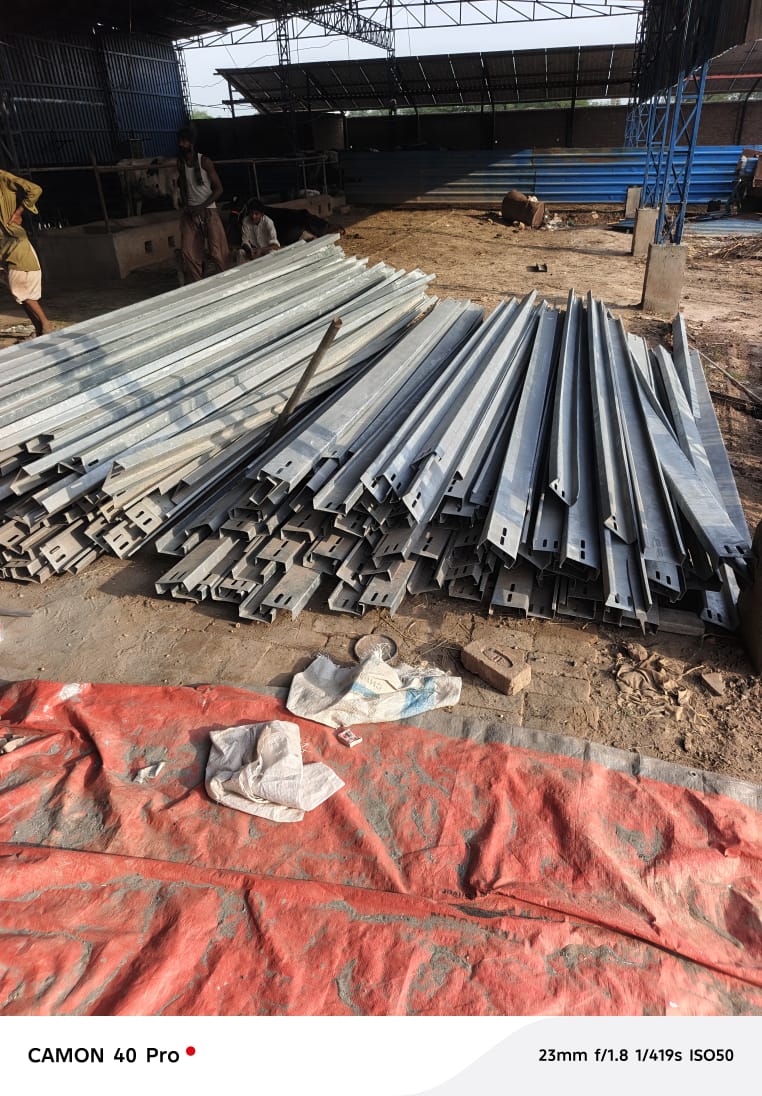
A Hot Dip Galvanizing Plant is a purpose-built industrial facility where fabricated steel or iron items — structural sections, pipes, transmission towers, fasteners, road barriers, agricultural equipment — are chemically cleaned and then fully immersed in a bath of molten zinc, usually kept between 440°C and 460°C. The zinc doesn’t just sit on top of the steel; it reacts with the iron to form a series of zinc-iron intermetallic alloy layers that are metallurgically bonded to the base metal. This is what makes hot dip galvanizing far more durable than painting or electroplating.
Unlike a paint booth, a galvanizing plant is a full chemical processing line — pre-treatment tanks, a zinc kettle, overhead cranes, fume extraction, and cooling and inspection stations all working together as one continuous system.
2. How a Hot Dip Galvanizing Plant Works — Step by Step
While the exact sequence varies slightly between manufacturers, every modern Hot Dip Galvanizing Plant follows the same core stages:
Step 1 — Inspection & Load Preparation
Fabricated steel is inspected for oil, paint, grease, and welding slag. Vent and drain holes are checked so molten zinc can flow freely through hollow sections during immersion — poor preparation here is the single biggest cause of coating defects.
Step 2 — Degreasing
Items are dipped in a hot alkaline (caustic) cleaning solution to strip oil, grease, and shop markings from the surface.
Step 3 — Rinsing
A clean-water rinse removes residual alkaline solution so it doesn’t contaminate the next tank.
Step 4 — Pickling
Steel is submerged in a dilute hydrochloric or sulfuric acid bath (roughly 10–32% concentration) to remove rust and mill scale, leaving a chemically clean, reactive metal surface.
Step 5 — Rinsing (Second Stage)
A second rinse removes acid residue before fluxing.
Step 6 — Fluxing
Parts pass through a zinc-ammonium-chloride flux bath, which strips any remaining oxide film and prevents re-oxidation before the item enters the zinc kettle — this step is critical for even zinc adhesion.
Step 7 — Drying
A short drying stage evaporates moisture from the flux coating, reducing spatter and safety risk when the item enters the molten zinc.
Step 8 — Galvanizing (Zinc Bath Immersion)
The item is lowered by crane into the kettle of molten zinc (typically 98%+ pure zinc) at 440–460°C. The zinc reacts with the iron to build a multi-layer intermetallic coating. Immersion time depends on steel thickness and mass.
Step 9 — Withdrawal & Cooling
Items are withdrawn slowly and evenly to control coating thickness, then air-cooled or quenched in a water bath to solidify the zinc layer.
Step 10 — Inspection & Finishing
Coating thickness is checked against ASTM A123 / ISO 1461 requirements, surfaces are trimmed of drips or spikes, and the finished product is passivated and released for dispatch.
3. Core Equipment of a Hot Dip Galvanizing Plant
| Component | Function |
|---|---|
| Degreasing & Pickling Tanks | Remove oil, grease, rust, and mill scale before galvanizing |
| Flux Tank | Prevents oxidation and improves zinc adhesion |
| Zinc Kettle | Holds molten zinc at 440-460°C; the heart of the plant |
| Overhead Crane System | Automated or manual handling of steel loads between tanks |
| Heating System (Gas / Oil / Induction) | Maintains kettle temperature to ASTM/ISO tolerances |
| Fume Extraction & Scrubbers | Captures acid and zinc-oxide emissions for environmental compliance |
| Cooling / Quench Tank | Solidifies the coating and controls final finish |
| Dross Removal & Ash Skimming Tools | Maintains zinc bath purity and reduces zinc wastage |
| Inspection & Finishing Station | Coating thickness testing, trimming, passivation |
Advanced plants — like the fully encapsulated systems used by leading European manufacturers — enclose the pre-treatment section entirely, allowing automated cranes to run without exposing staff to acid fumes, which improves both safety and process consistency.
4. Types of Hot Dip Galvanizing Plants
| Type | Best For |
|---|---|
| General (Batch) Galvanizing Plant | Structural steel, pipes, fasteners, fabricated items — the most common type for job-work galvanizers |
| Continuous (Sheet/Coil) Galvanizing Line | Galvanized sheet, coil, and wire production for high-volume manufacturing |
| Encapsulated / Enclosed Plant | Operations needing minimal emissions, higher automation, and strict environmental compliance |
| Open Plant | Lower upfront investment, common for smaller regional galvanizers |
5. Hot Dip Galvanizing Plant Cost & Investment Factors
Cost is the question every buyer asks first, and it varies enormously by capacity, automation level, and geography.
- Initial investment: A complete turnkey plant globally can range from roughly USD 0.5 million for a small unit to USD 3-5 million for a large, fully automated facility.
- Zinc kettle: Typically the single largest line item — from around USD 200,000 for a smaller kettle up to USD 1 million+ for large, high-capacity kettles.
- Zinc consumption: Often the biggest ongoing cost, commonly 65-75% of total operating expense — so kettle efficiency and dross control directly affect profitability.
- Energy & labor: Monthly operational overhead commonly falls between USD 10,000 and 50,000 depending on plant size and local energy tariffs.
- Per-unit galvanizing cost: Frequently quoted around USD 100-200 per ton of steel processed, or roughly USD 0.50-2.00 per pound depending on part thickness and geometry.
- Location: Proximity to steel fabrication hubs and ports lowers transport costs and shortens turnaround time — a major factor for plants in Punjab and Sindh.
Over the coating’s 50-75 year service life, hot dip galvanizing is typically 15-33% cheaper than repeated repainting cycles, which is the real financial argument investors and EPC contractors should evaluate — not just the upfront kettle price.
6. International Standards That Govern Galvanizing Quality
| Standard | Covers |
|---|---|
| ASTM A123 / A123M | Zinc coatings on iron and steel products (USA standard, widely referenced in Pakistan) |
| ISO 1461 | International standard for hot dip galvanized coatings on fabricated iron and steel |
| BS EN ISO 1461 | British/European adoption of ISO 1461 |
| ASTM A153 | Zinc coating on iron and steel hardware (bolts, nuts, fasteners) |
Always ask a plant or fabricator for a Certificate of Conformance referencing one of these standards — coating thickness (measured in microns) is the single most important number to verify on any galvanized order.
7. Hot Dip Galvanizing Plant in Pakistan — Market, Demand & Cities
Pakistan’s demand for hot dip galvanized steel has been accelerating for several structural reasons:
- Solar power expansion: Ground-mounted solar structures across Punjab and Sindh require galvanized steel frames to survive extreme heat, humidity, and dust exposure.
- Power transmission & telecom infrastructure: Transmission towers, telecom masts, and grid stations rely on galvanized steel for decades-long, maintenance-free service.
- CPEC and infrastructure projects: Road safety barriers, bridges, and industrial-zone construction have significantly increased structural steel volumes needing corrosion protection.
- Coastal and industrial corrosion exposure: Karachi’s coastal humidity and industrial-belt pollution around Lahore, Faisalabad, and Sialkot make ordinary painted steel a poor long-term choice.
- Agriculture & poultry sector: Galvanized sheds, cages, and structural frames are now standard for durability in Pakistan’s climate.
Where Galvanizing Plants Are Concentrated in Pakistan
Most existing and planned Hot Dip Galvanizing Plants in Pakistan are located around the country’s major steel-fabrication clusters — Lahore, Karachi, Faisalabad, Gujranwala, and Sialkot — close to structural steel fabricators, EPC contractors, and export-oriented manufacturers who need in-house or nearby galvanizing capacity rather than shipping steel long distances.
Challenges Specific to the Pakistani Market
- Zinc is largely imported, so exchange-rate volatility directly affects plant operating costs.
- Energy tariffs and gas load-shedding can affect kettle temperature consistency if backup heating isn’t planned for.
- Environmental compliance for acid fume and wastewater handling is increasingly enforced, favoring encapsulated or scrubber-equipped plants.
- Skilled operator availability for automated, high-precision plants is still developing, making manufacturer training and after-sales support important selection criteria.
8. How to Choose the Right Hot Dip Galvanizing Plant Manufacturer
- Kettle design & steel grade: Ask what kettle steel grade is used and its expected service life before replacement.
- Automation level: More automated crane and dosing systems reduce labor dependency and improve coating consistency.
- Fume extraction technology: Encapsulated, scrubber-equipped systems reduce environmental risk and future compliance costs.
- Standards compliance: Confirm the plant design supports ASTM A123 / ISO 1461 coating thickness requirements.
- Zinc efficiency: Even small improvements in zinc utilization compound into major savings over years of operation.
- After-sales service & spares: For Pakistan specifically, local or regional technical support and spare-parts access matters as much as the initial installation.
- References from working plants: Ask for site visits or contactable references — not just brochures.
- Total cost of ownership: Compare 10-year operating costs, not just the upfront quotation.
9. Frequently Asked Questions
Q1. What is a Hot Dip Galvanizing Plant?
It’s an industrial facility that coats steel or iron with molten zinc at roughly 440-460°C to protect it from corrosion for decades, using a sequence of cleaning, pickling, fluxing, dipping, and cooling stages.
Q2. How much does a Hot Dip Galvanizing Plant cost in Pakistan?
Depending on capacity and automation, expect an investment roughly in the range of PKR 150 million to 800 million (about USD 0.5-3 million), with zinc, energy, and labor as the main ongoing costs.
Q3. What temperature does a galvanizing kettle run at?
Molten zinc is maintained at approximately 440-460°C throughout the dipping process.
Q4. Which industries in Pakistan use galvanized steel the most?
Solar structures, power transmission and telecom towers, road infrastructure, agriculture, and general construction are the biggest consumers.
Q5. How long does a hot dip galvanized coating last?
Typically 50-75 years in most environments when applied to ASTM A123 or ISO 1461 standards, with no repainting required.
Q6. How is hot dip galvanizing different from electroplating?
Hot dip galvanizing produces a much thicker, metallurgically bonded coating with sacrificial corrosion protection, while electroplating produces a thinner, purely cosmetic layer with far less durability.